
The Widower
“Don’t Ask, If You Really Don’t Want to Know”

As many of you have read, these columns have three goals.
First, they’ve helped me mourn and process my wife Cheryl’s death of Alzheimer’s complications two years ago this month.
Second, I hope they help readers who are caring for loved ones suffering from dementia or other debilitating afflictions.
Third, I hoped to build an audience and convince a publisher that my writing and this topic have value.
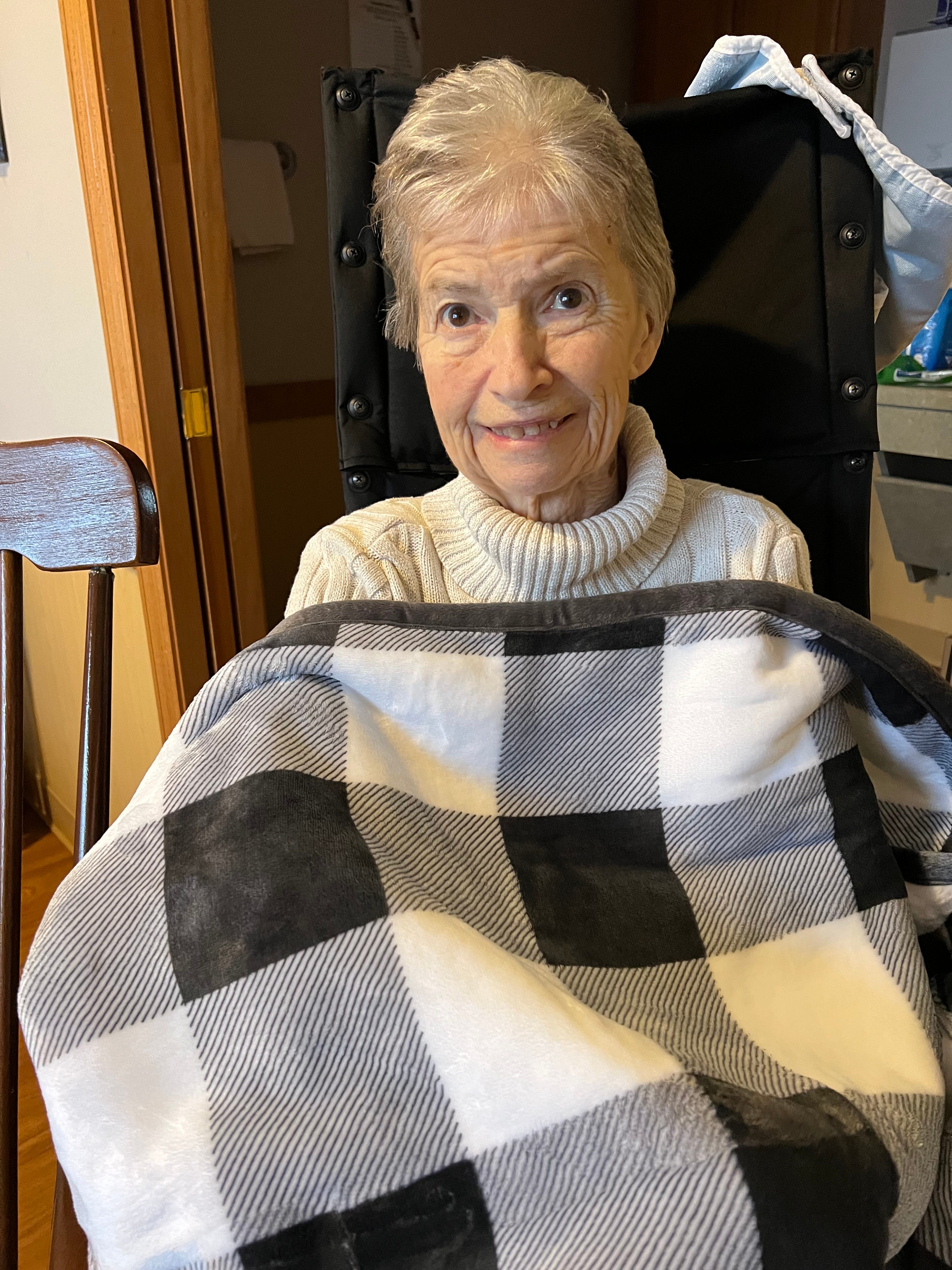
On this latter goal, I’m continuing to work on a manuscript, a chronological look at Cheryl’s slide into Alzheimer’s and what I did right as her caregiver and the many things I did wrong. For a decade, I kept a journal on my computer. I also wrote twenty side stories and poems as situations arose. Writing was therapeutic, helping me vent and process Cheryl’s descent.
The journal was 350,000 words. After weaving it and side stories together, I pared the package to 150,000 words—too long to be publishable. No one would read that much, and such a book would encompass too many pages, making it cost prohibitive.
Further whittling dropped it to 135,000 words. Last October, a publisher at the Wisconsin Writers Association convention suggested he might be interested if I carved it to no more than 100,000.
“I don’t know if I can trim it that much and do the story justice.”
“I’m confident that you can,” he said.
Another spin through trimmed the package to 117,000 words. In mid-January, I began a third run-through with a target of fewer than 100,000. Halfway through, I doubled back to the start for a fourth edit. By Friday, I again started tackling the second half.
Now, I’m at fewer than 106,000 words.
I keep finding sentences where I could say the same thing in fewer and fewer words. Writers sometimes talk of “killing their babies.” It sounds morbid but means writers must let go of favorite sections, ideas, or characters that might detract from the overall story. Thus, I’ve killed whole chunks and side stories.
I still doubt that my manuscript will get published. The market—mainly caregivers and their families—might be too narrow to lure a publisher.
In the meantime, here’s one of those “babies” left in the bloodbath of my editing. It’s one of several I’ll share in coming weeks. I wrote it Feb. 24, 2024—one day before Cheryl died.
“Don’t Ask If You Really Don’t Want to Know”
“How’s it going?”
“How are you today?”
“What’s happening?”
These questions are common. In our culture, they serve as cordial greetings.
The questioner neither wants nor expects a full and honest answer.
Except that given my wife’s condition, it’s tempting to give that full and honest answer.
Having heard such questions often, I decided to give a full and honest answer to Karl, with whom I’m well acquainted. Nearing retirement, he was bagging my groceries at his part-time job.
“How are you enjoying retirement?” he asked 7½ years after I left the Janesville Gazette.
He’d opened the door, so I stepped through it.
“Well, not so much,” I said.
“Why not?”
“I’d be enjoying myself more if I weren’t watching my wife fade away due to Alzheimer’s.”
“Oh, I’m so sorry,” said Karl, a look of empathy replacing his grin.
We talked a bit more before I let him off the hook, carried my bags toward the door, and Karl turned to help the next customer.
After that encounter, answering in honesty didn’t seem farfetched the next time I shopped there. This time, the teenager ringing up my purchases asked, “How are you today?”
“Well, not so good, to be honest.”
“Why’s that?”
“Well, my wife is dying in a memory care facility, and I just left there.”
“Oh. Sorry.”
“Thanks,” I said, not pushing him further. I figured he felt bad enough for asking, not expecting to be blindsided with a frank answer.
A few days later, while I walked our dog on a pleasant February morning, a UPS driver dropped a package at a home along our path.
“How are you today?” the guy asked.
What can Brown do for me? Let me bend this driver’s ear; that would be a step in the right direction. Instead, feeling guilty for popping that naïve young clerk’s brightness balloon two days earlier, I let it pass.
“Okay,” I said without elaborating. Yes, I was lying.
I was tempted again when I walked into Agrace Hospice the next morning and a receptionist greeted me with a perky “Hi, how are you today?”
It seemed an odd question. After all, chances were that I had come to visit a dying loved one. “Well,” I wanted to say, “how do you think I am, given that I’m here to visit my wife, who’s on her deathbed?”
Instead, I chose to save this woman’s day, as well, No sense making everyone I encounter miserable. After all, those “innocent” questions are bound to continue.
“I’m okay,” I said, then walked past her and toward my grim reality.
I'm sorry you had to abandon this "baby," Greg. By speaking your truth when asked how you were doing, you also allowed your heart to show to those who inquired. Your honesty brought out the pain behind the smile you were using as mask. I think this entry is one of your best because for me it conveys the raw emotion you were feeling as you watched this disease slowly take away the Cheryl you once knew.
These same questions are in my life daily since I began my solitary life after losing Bob. I sometimes answer honestly also. It does depend on who is asking and how familiar they are with my real life. I admire how you chose the time and activity for your answers. I wonder also aren't these type of questions and auto comment for those career positions asking them? M